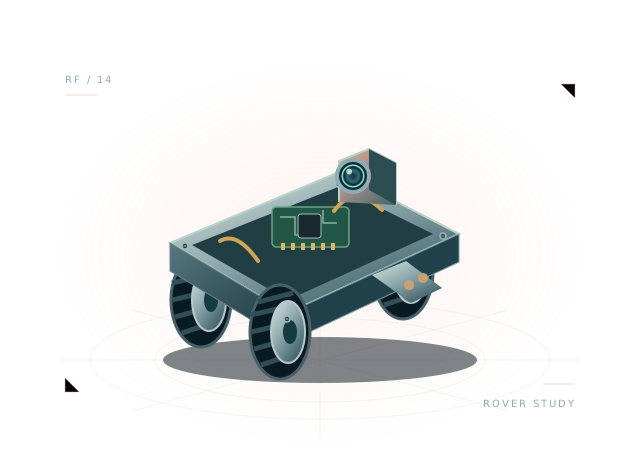
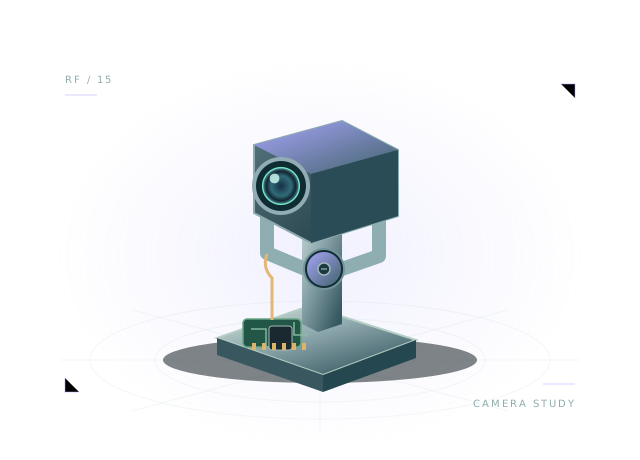
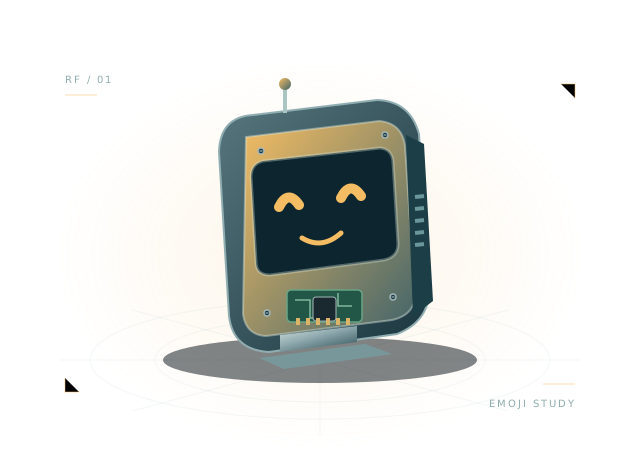
Inspect the design
Inspect the mast's attachment and the sensor and camera power paths.
Lab adds a LiDAR mast and a camera to a mobile research layout. Bring the assembly, control code and observations together as a starting point for experiments with supported two-wheel physics and bounded AI actions.
Includes assembly, starter wiring and executable virtual JavaScript.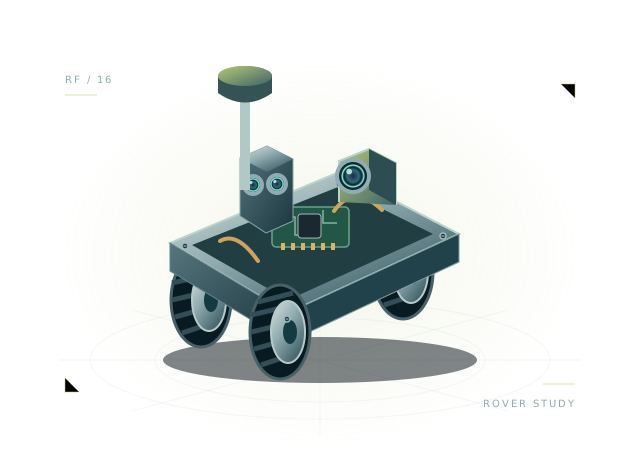 Concept illustration · inspect actual geometry above.
A research platform with a LiDAR mast and camera. All 21 components and 45 starter connections remain editable in your own project.
Use the starting assembly to ask better questions about your design. Save a copy, change a parameter and compare what happens.
Inspect the mast's attachment and the sensor and camera power paths.
Run the rover demo and compare the supported range and camera observations.
Create a repeatable experiment with your code and inspect the recorded results.
function step(robot) {
  robot.drive(0, 0);
  if (robot.brownout || robot.battery.voltage < 6.25) { robot.display('🪫'); return; }
  const range = robot.sensors.range;
  if (!Number.isFinite(range)) { robot.display('⚠️'); return; }
  const obstacle = range < 0.65;
  robot.drive(obstacle ? -0.3 : 0.6, obstacle ? 0.35 : 0.6);
  robot.display(obstacle ? '🤔' : '😊');
}
The full, editable starter script is included in the workbench.
Supported two-wheel physics, range and camera. No ROS runtime, SLAM or full LiDAR scan simulation.
This is a virtual JavaScript environment. It does not emulate ESP-IDF, Arduino firmware or a manufacturer's exact hardware.
A two-wheel teaching robot with a downward sensor layout.
Compact face, display and expressive servo with 3.3 V GPIO aliases.
Open the template, inspect the wiring and run its first behavior.