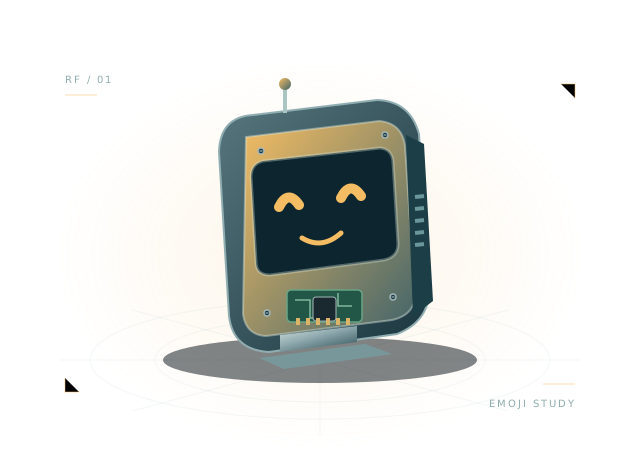
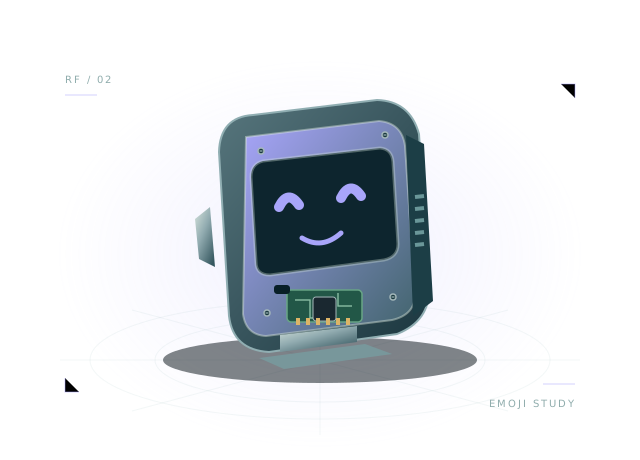
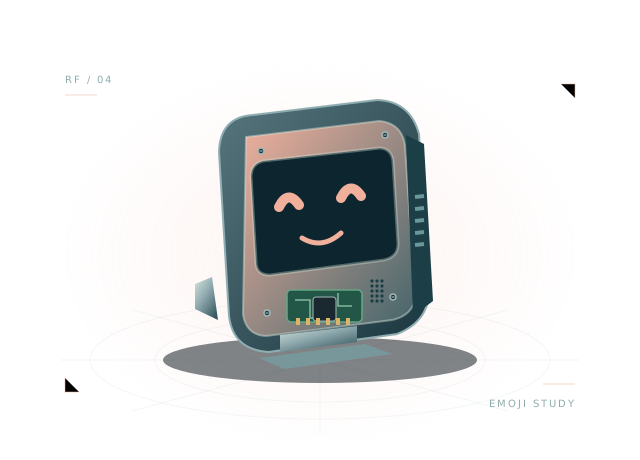
Inspect the design
Inspect the camera's power and data path to the virtual AI host.
Vision adds a camera and a separate virtual AI host to an ESP32-S3 companion. Study how observation, expression and control can fit together before choosing the hardware for a connected robot.
Includes assembly, starter wiring and executable virtual JavaScript.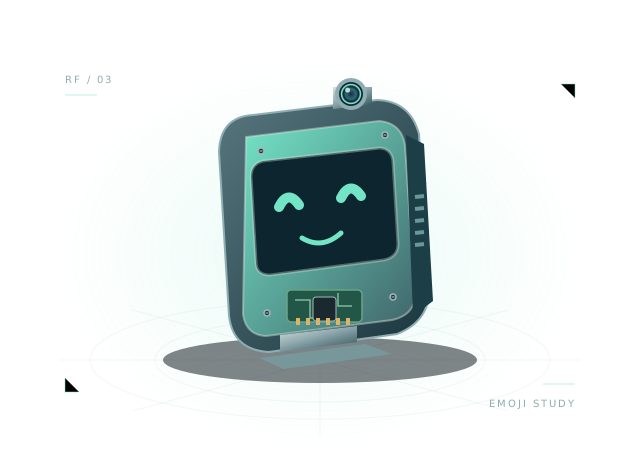 Concept illustration · inspect actual geometry above.
Camera, display and audio planning with a separate virtual AI host. All 10 components and 22 starter connections remain editable in your own project.
Use the starting assembly to ask better questions about your design. Save a copy, change a parameter and compare what happens.
Inspect the camera's power and data path to the virtual AI host.
Try a rendered camera observation in the AI workspace with your own provider key.
Change bounded servo targets and display behavior; audio remains a text-event abstraction.
let previous = '';
function step(robot) {
  robot.drive(0, 0);
  if (robot.brownout || robot.battery.voltage < 6.25) { robot.display('🪫'); return; }
  const face = ['😊', '🤖', '◕ ◕', '😴'][Math.floor(robot.time / 2) % 4];
  robot.display(face);
  robot.servo('servo', 0.45 * Math.sin(robot.time));
  if (face !== previous) { robot.log('Expression:', face); previous = face; }
}
The full, editable starter script is included in the workbench.
Rendered camera observations and supported AI adapters. Audio parts produce bounded text events, not acoustics.
This is a virtual JavaScript environment. It does not emulate ESP-IDF, Arduino firmware or a manufacturer's exact hardware.
Compact face, display and expressive servo with 3.3 V GPIO aliases.
The original display, microphone, speaker and servo example.
Open the template, inspect the wiring and run its first behavior.